Connect this guide with the rest of your visit in the Makkah trip planner. Read how the research is made and what its sources establish.
At a glance
Start here
- Plan the cultural district and mountain as separate decisions.
- Choose the Revelation Exhibition for narrative interpretation and the Quran Museum for manuscripts, writing and ornament.
- Confirm booking and access on the exact venue page.
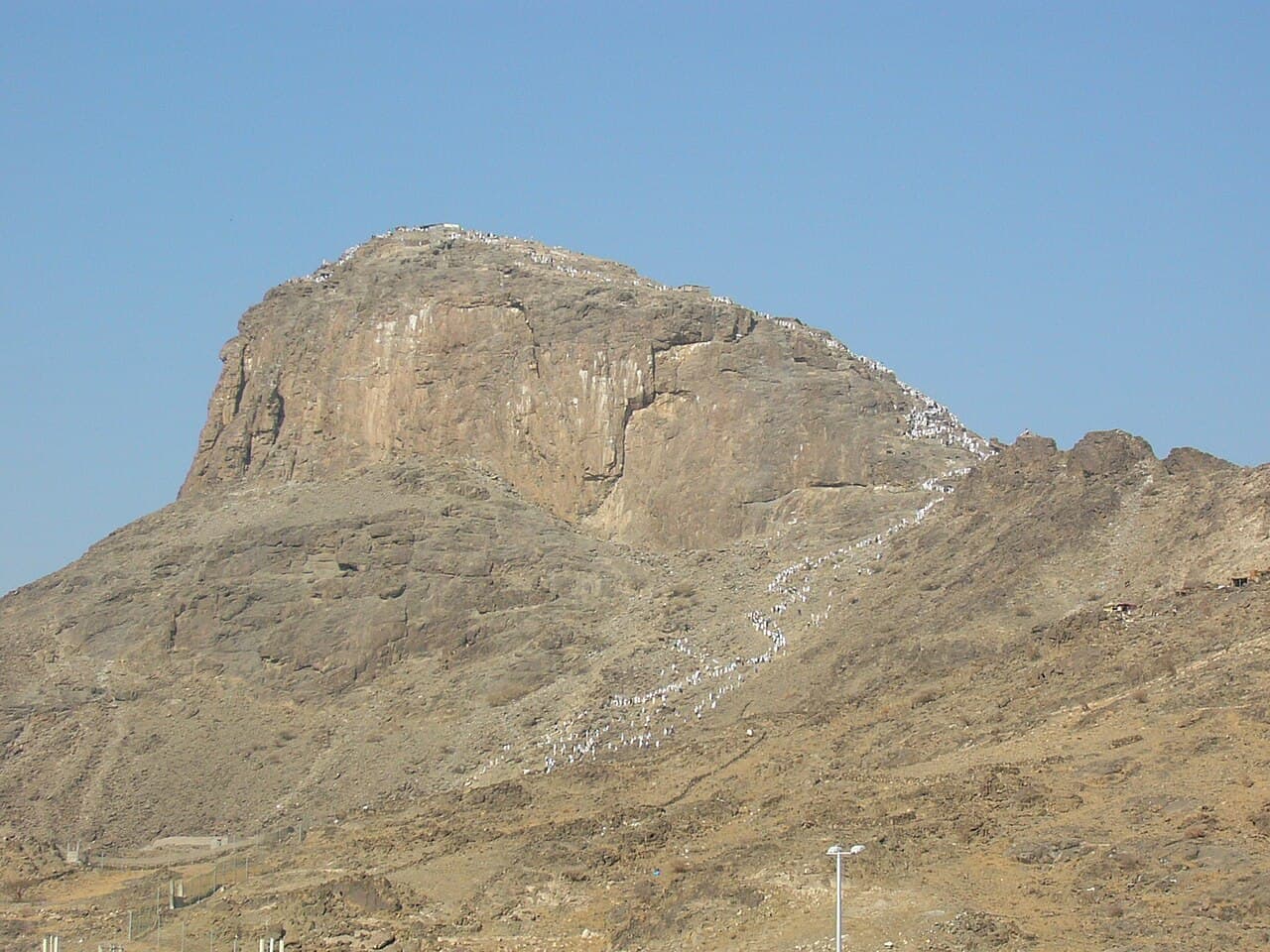
- The article image shows Jabal al-Nour as geographic context, not the district buildings.
01
Define an exhibits-first visit
The district page describes a modern cultural destination at the foot of Jabal al-Nour. That creates two related but different visitor ideas: learning in a managed exhibition setting and approaching the mountain. Combine them only if current access information and the group itself support both. Otherwise, keep the district as a complete visit in its own right.
Choose one question before arrival. You might ask how display technology presents the idea of revelation, how Quran manuscripts record changes in writing and ornament, or how a purpose-built district interprets a landscape associated with early Islamic history. A clear question is more useful than trying to absorb every panel and screen in one pass.
- Exhibitions only: structured indoor interpretation.
- District public spaces: conversation and rest between galleries.
- Any ascent: a separate decision, not an automatic museum extension.
02
Use the Revelation Exhibition for the broad narrative
The Revelation Exhibition's official page presents it as an interactive, audio-visual journey through the story of revelation and the biography of Prophet Muhammad. Its value for a visitor is structural: the exhibition organizes a large religious and historical subject into a sequence of rooms and media rather than asking the visitor to assemble a story from scattered landmarks.
Treat the exhibition as institutional interpretation, not as religious instruction from this article. Read the curatorial sequence, notice how sound, projection and spatial design direct attention, and reserve questions of belief or practice for trusted qualified sources. If translations or guided interpretation matter, ask the venue what is currently offered before booking.
Sources: Discover Makkah, Royal Commission for Makkah City and Holy Sites; Discover Makkah, Royal Commission for Makkah City and Holy Sites03
Use the Quran Museum for material evidence
The Holy Quran Museum page emphasizes manuscripts, the history of compilation and preservation, Arabic calligraphy and ornament. That makes it a different visit from a narrative exhibition. Instead of following only a chronological story, look closely at how script, page design, materials and display methods communicate the history of a written text.
Choose the Revelation Exhibition when the group prefers immersive storytelling, and the Quran Museum when it prefers manuscripts, calligraphy and object-focused interpretation. Visiting both can work if attention remains strong, but neither should become a quick photo stop. Confirm the live ticket or reservation process for each venue rather than assuming district entry covers every exhibition.
- Narrative focus: Revelation Exhibition.
- Manuscript and calligraphy focus: Holy Quran Museum.
- Combined visit: pause between different display styles.
04
Keep Jabal al-Nour as a separate plan
The district's position beside Jabal al-Nour explains its subject and setting, but it does not make the mountain route part of an exhibition visit. Official destination material discusses a path toward the cave separately from the museums. A place page can describe that path; it cannot assess a particular visitor's health, conditions on the day or a temporary restriction.
If the group considers an ascent, stop the museum plan and make a new decision using current official notices, weather information and individual capability. Do not present the climb as required for understanding the exhibitions. Visitors who remain in the district can still examine how designers interpret the mountain's historical association through media, objects and the surrounding landscape.
Sources: Discover Makkah, Royal Commission for Makkah City and Holy Sites05
Sequence the district for attention, not volume
Begin with the exhibition most closely tied to the group's question. Take a real pause afterward in a public area, then decide whether the second museum will add a different kind of evidence. This is better than queuing for everything first and discovering that younger visitors, older relatives or language needs make the second experience less useful.
Ask each person to select one display, manuscript feature or design technique to discuss. That gives the group a purpose without inventing a devotional program. The district page describes supporting public spaces, but individual outlets and services can change; plan the break without relying on a particular restaurant, opening hour or commercial offer.
- First: the exhibition answering the main question.
- Pause: compare one observation per person.
- Second: continue only if it offers different evidence.
06
Confirm each venue on its own page
The exact district, Revelation Exhibition and Holy Quran Museum pages are the right starting points because each describes a different facility. Check the current date, booking control, language support, photography policy and entry arrangement directly. Do not copy hours or admission notes from this guide; those are mutable and may change between research and travel.
If a booking link fails or the venue page is unclear, contact the operator or choose a visit that does not depend on unresolved entry. A third-party map pin may help orientation but cannot prove admission. Save the confirmed venue name and destination pin before leaving central Makkah, and arrange the return without assuming transport will wait at the same point.
- Verify the exact exhibition, not only the district.
- Ask about language and photography arrangements when they matter.
- Keep a district-only alternative if entry cannot be confirmed.
Useful answers
Reader questions
Is Hira Cultural District the same as climbing Jabal al-Nour?
No. The district is a purpose-built cultural destination at the mountain's foot, with museums and public areas. Treat any ascent as a separate plan with current access and condition checks.
Sources: Discover Makkah, Royal Commission for Makkah City and Holy SitesWhich Hira exhibition should I choose first?
Choose the Revelation Exhibition for a broad interactive narrative, or the Holy Quran Museum for manuscripts, calligraphy and material history. Confirm each venue's current entry process.
Sources: Discover Makkah, Royal Commission for Makkah City and Holy Sites; Discover Makkah, Royal Commission for Makkah City and Holy SitesDoes the district listing guarantee museum admission?
No. A listing identifies a place and stated visitor offer. Check the exact venue's live booking control and current official notice before travelling.
Sources: Discover Makkah, Royal Commission for Makkah City and Holy Sites; Discover Makkah, Royal Commission for Makkah City and Holy Sites; Discover Makkah, Royal Commission for Makkah City and Holy SitesRead the evidence
Sources and further reading
These sources support the relevant sections above. Plans and comparisons are editorial suggestions. Check operators for current arrangements.
- Hira Cultural District ↗Discover Makkah, Royal Commission for Makkah City and Holy Sites · Research date 14 September 2026
The district's location at Jabal al-Nour, named exhibitions and distinction between facilities and the separate path.
- Revelation Exhibition ↗Discover Makkah, Royal Commission for Makkah City and Holy Sites · Research date 14 September 2026
The exhibition's interactive audio-visual narrative focus.
- The Holy Quran Museum ↗Discover Makkah, Royal Commission for Makkah City and Holy Sites · Research date 14 September 2026
The museum's emphasis on manuscripts, preservation, calligraphy, ornament and interactive interpretation.